“O Song of Songs!”
Earth Abides“O Song of Songs!” is the expression Ish draws from a book’s closing chapter and later invokes during his first intimate encounter with Em. Its recurrence links a private moment of reading, when he recognizes how thoroughly the catastrophe has estranged him from life, with a bodily, mutual affirmation that begins to draw him back into it.
Reading and Recognition
Near the end of the book he is reading, Ish finds the heading “The song of songs, which is Solomon's.” He reads the lines that follow, including “Let him kiss me with the kisses of his mouth: for thy love is better than wine.” The love poetry interrupts the isolation of his reading: it stirs feelings he has rarely experienced during the months since the catastrophe.
The passage prompts a recognition about more than desire. Ish sees that the shock of the catastrophe has left him like a king who watches life pass without joining it. Even people who drank themselves to death had, in one sense, been participating in life; Ish had instead been rejecting it. The allusion therefore first appears as a measure of distance: the language of love awakens him to what his detached survival has cost.
Return in the Encounter with Em
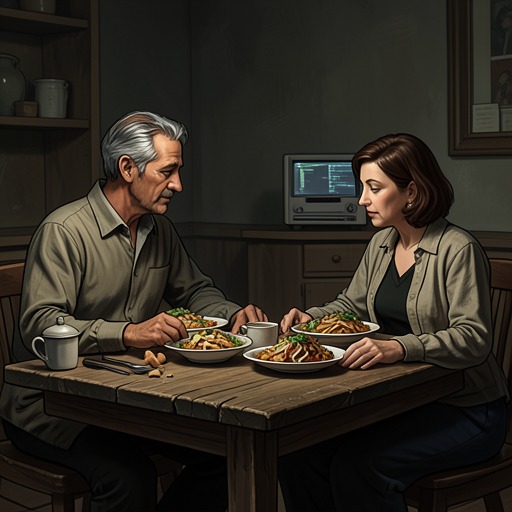
The expression returns when Ish and Em move from conversation into physical intimacy. Ish rises so abruptly that he upsets his chair; the table that had seemed to join them now stands between them until he steps around it and embraces her. The lyrical invocation names and magnifies the physical closeness between them, drawing on images of softness, ivory, wool, and cedars. It ends with “O Song of Songs!”—not as a passage Ish is merely reading, but as language accompanying an encounter in which he has crossed the space separating them.
After Em goes into the inner room, Ish remains tense and awake, concerned about the danger of pregnancy in a world without doctors or other women. He trusts that Em has considered the risk as well. The expression returns again in his thoughts, now joined to images of fragrance, warmth, contained rivers, and strength. The passage holds the affirmation of desire together with the consequences that make intimacy perilous in their altered world.
Recurrence and Significance
The expression’s two appearances form a movement from recognition to participation. In the first, a line on a page exposes Ish’s habit of observing rather than entering life; in the second, the same love-poetry register accompanies his physical approach to Em. The parallel does not erase the catastrophe or its practical dangers. Instead, the recurrence makes intimacy a concrete counterforce to Ish’s withdrawal: he moves from reading about love in solitude to sharing an encounter whose emotional and physical risks both of them must face.